Introduction
A car key can snap without warning, especially when a lock has started to feel stiff or the key blade has become worn. For drivers in Parramatta, this can turn an ordinary trip into an unexpected problem. You might be unable to start your vehicle, secure it properly or continue with your day.
When part of a key becomes trapped inside a lock, the first question is whether the lock itself needs replacing. In many cases, it does not. A professional automotive locksmith can examine the broken section, determine why it became stuck and choose a suitable way to remove it.
Car Keys Locksmith helps drivers understand their options when dealing with automotive key and lock problems. Knowing how broken key extraction works can also help you avoid actions that could make the repair more complicated.
What Happens When a Car Key Breaks Inside a Lock?
A car lock is designed to accept a correctly shaped key and allow its internal components to move as intended. When a key blade snaps, the remaining piece can obstruct the keyway and prevent normal operation.
The situation varies depending on where the break occurs. A fragment left inside a door lock may stop the key from entering properly, while a broken piece inside the ignition can interfere with starting the vehicle.
The position of the fragment is important. If part of the key remains accessible, extraction may be relatively straightforward. If the broken section sits deep inside the cylinder, the locksmith may need a more careful approach.
The condition of the lock also matters. A key that breaks in an otherwise functional cylinder presents a different repair challenge from one that snaps inside a worn or jammed ignition.
How Does a Locksmith Remove a Broken Car Key?
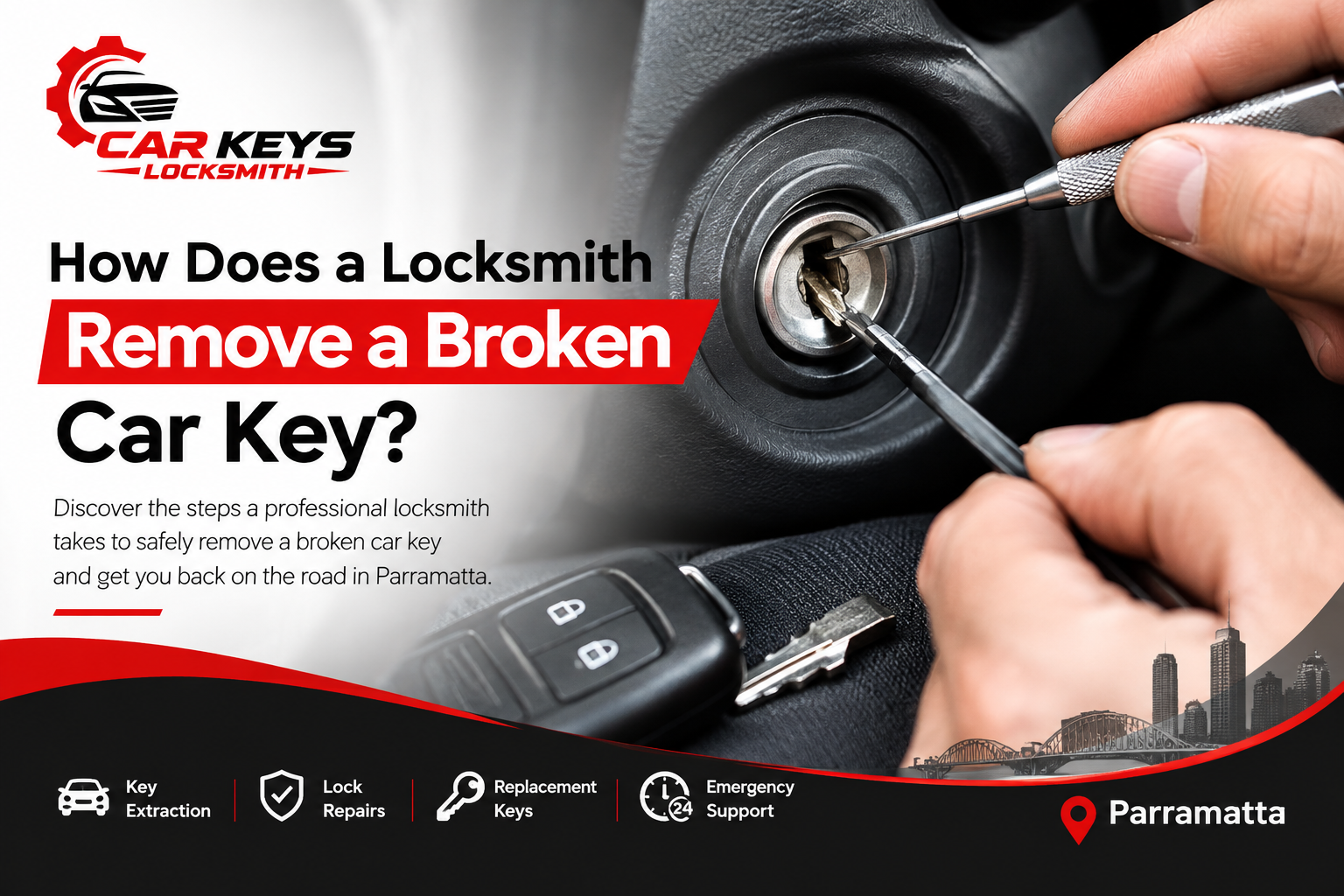
Removing a broken car key requires more than simply pulling at the exposed metal. An automotive locksmith assesses the lock before deciding how to retrieve the fragment without causing unnecessary damage.
1. Examining the Lock and Broken Key
The locksmith begins by identifying the location of the broken section and checking how it sits inside the cylinder.
They may consider whether the key broke during normal use, whether the lock was already difficult to turn and whether any previous removal attempts have affected the mechanism.
This inspection helps establish whether the fragment can be extracted directly or whether the lock needs further attention.
2. Choosing a Suitable Extraction Method
Different locks and key fragments require different approaches. Automotive locksmiths may use specialist broken-key extractors designed to engage with the trapped section.
The choice of tool depends on the available space, the depth of the fragment and the lock’s design. The aim is to retrieve the broken piece while keeping the surrounding mechanism intact.
Using the wrong tool can push the fragment farther into the lock or damage internal components, which is why professional assessment is particularly valuable when the key has snapped deep inside the ignition.
3. Extracting the Trapped Fragment
After selecting an appropriate tool, the locksmith carefully works to release the broken section from the keyway.
The fragment’s position and the condition of the cylinder determine how difficult this stage will be. A piece that is firmly lodged or has become misaligned may require additional care.
Extraction does not always follow the same process for every vehicle. The locksmith adapts the approach to the lock rather than applying unnecessary force.
If the cylinder is damaged or the fragment cannot be removed safely using the initial method, further repair work may need to be considered.
4. Checking Whether the Lock Still Works
Once the broken piece has been removed, the locksmith can assess the lock’s condition.
This is an important step because the broken key may have been a symptom of an existing problem. A worn ignition cylinder, damaged door lock or poorly cut key can contribute to repeated sticking.
If the lock remains serviceable, replacing the broken key may be all that is needed. If internal wear or mechanical damage is present, the locksmith can explain the available repair or replacement options.
5. Arranging a Replacement Key
A broken key may no longer be suitable for regular use, even if the remaining pieces can be matched to the original.
Depending on the vehicle, a replacement can involve cutting a new blade, supplying a compatible remote or programming a transponder key.
Many modern vehicles use electronic immobiliser systems, so a newly cut blade may not be sufficient to start the engine. The replacement key may also need to be electronically paired with the vehicle.
Car Keys Locksmith can be contacted to discuss suitable replacement options for your vehicle in Parramatta. The exact requirements depend on the vehicle’s make, model, year and security system.
Why Do Car Keys Snap Inside Ignitions and Door Locks?
A broken key is not always caused by one obvious problem. Several factors can weaken a key or make a lock harder to operate.
Metal fatigue and key wear: A key used regularly can develop wear over time. Previous bending or damage can make the blade more vulnerable to snapping.
A stiff ignition cylinder: If the ignition becomes harder to turn, the resistance can place extra stress on the key. The cylinder may need inspection rather than repeated force.
A worn door lock: Internal wear or damage can interfere with the key’s movement, increasing the chance of a break during use.
An incorrectly cut key: A replacement that does not match the lock properly may stick or operate inconsistently. Repeated resistance should be investigated.
Excessive pressure: Forcing a key when it will not turn can cause the blade to bend or break. A key should operate without excessive effort.
Recognising these warning signs early may help prevent another broken key and reduce the likelihood of additional lock damage.
Is Removing a Broken Car Key Different From Removing One From an Ignition?
The basic objective is the same: retrieve the broken section while protecting the lock. However, an ignition cylinder and a door lock can present different challenges.
An ignition may contain components associated with starting the vehicle and its security system. Damage to this mechanism can lead to further problems, so extraction requires an approach suited to the specific cylinder.
A door lock has its own internal design and may be affected by wear, dirt or mechanical damage. The locksmith must establish how the fragment is positioned before selecting a removal method.
In either case, the key should not be forced further into the lock. A professional assessment helps determine whether extraction alone is sufficient or whether a separate repair is necessary.
What Should You Do If Your Car Key Breaks in Parramatta?
If your key snaps while you are out in Parramatta, avoid making repeated attempts to turn the remaining piece. Additional pressure can make the fragment harder to retrieve.
Do not apply glue to the broken sections or insert sharp objects into the keyway. These attempts can leave residue, push the fragment deeper or damage the lock.
Instead, take note of a few details:
- Is the broken key inside the ignition or the door lock?
- Is any part of the fragment still visible?
- Was the lock difficult to turn before the key broke?
- Do you have a spare key available?
- What are the vehicle’s make, model and year?
Sharing this information with an automotive locksmith can help clarify the problem and identify the appropriate service.
If the key has broken inside the ignition, avoid attempting to start the vehicle until the situation has been assessed. If you are stranded in an unsafe location, move to a safe place while arranging assistance.
Broken Car Key Help From Car Keys Locksmith in Parramatta
A snapped car key does not automatically mean you need a replacement ignition or a new door lock. The right solution depends on the fragment’s position, the condition of the cylinder and the type of key your vehicle uses.
Car Keys Locksmith can be contacted to enquire about broken car key extraction, replacement keys and related automotive locksmith services in Parramatta. Explain what happened and provide your vehicle details so the appropriate options can be discussed.
For some vehicles, removing the fragment and cutting a replacement key may resolve the issue. Others may require additional ignition repairs, a new lock component or electronic key programming.
The important thing is to identify the cause of the problem rather than treating the broken fragment as the only issue. A suitable repair can help restore normal key operation and reduce the risk of the same problem recurring.
Frequently Asked Questions
1. Can a locksmith remove a broken car key without replacing the lock?
Yes, in many cases. If the lock is still in good condition, a locksmith may be able to extract the fragment and leave the existing cylinder in place. Replacement is generally considered when the lock is damaged or cannot function properly.
2. What if the broken key is deep inside the ignition?
A deeply lodged fragment may require specialist extraction tools and a more careful assessment. The locksmith will examine its position and the cylinder’s condition before deciding on the safest suitable approach.
3. Will my car need a new key after broken key extraction?
Not necessarily, but a replacement is often advisable if the original blade is damaged. Depending on your vehicle, the new key may require cutting and electronic programming.
4. Can a broken car key damage the ignition?
The break itself does not always damage the ignition. However, excessive force, previous extraction attempts or an existing mechanical fault may affect the cylinder. An inspection can help determine whether further repairs are needed.
5. Can I contact Car Keys Locksmith for a broken car key in Parramatta?
You can contact Car Keys Locksmith to enquire about broken car key extraction and replacement options in Parramatta. Confirm service availability for your location, compatibility with your vehicle and the expected price before arranging the work.
Leave a Reply